Publication
15 June 2026
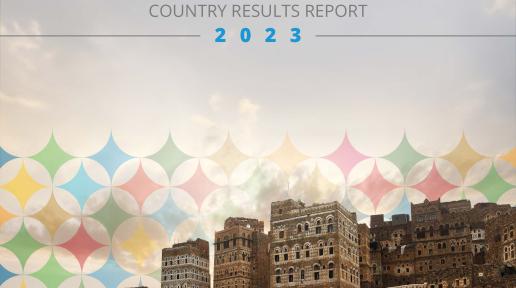
UN Yemen Country Results Report 2025
After more than a decade of conflict, Yemen, home to more than 40 million people, remains one of the world’s most severe humanitarian and development crises, driven by economic collapse and regional volatility. Humanitarian needs continue to rise, with over 21 million people projected to require assistance in 2026. Acute food insecurity affects an estimated 18.3 million people, while 2.2 million children under five suffer from acute malnutrition. Disease outbreaks, including measles and cholera, are further straining the health system.The development trajectory has sharply deteriorated. Yemen’s economy has contracted by more than 50 per cent since the start of the conflict, with GDP per capita cut by over half. Yemen imports around 90 per cent of its food, leaving it highly exposed to global shocks. Only around 59 per cent of health facilities are fully functional, while access to basic services remains highly uneven. As a result, more than 80 per cent of the population lives below the poverty line.Furthermore, Yemen’s vulnerability to climate change became more evident in 2025, affecting hundreds of thousands of people, with floodingdamaging homes and infrastructure across multiple governorates.The operating environment for the UN entities and partners has further deteriorated, particularly in areas under the control of the Houthi de facto authorities (DFA), where approximately 80 per cent of humanitarian needs are concentrated. The continued arbitrary detention of 73 UN personnel, alongside restrictions on movement and the seizure of UN assets, has severely constrained operations.Amid the crisis, Yemen has made notable policy strides. The newly appointed Government of Yemen has set a clear objective to focus on recovery efforts to address the root causes of recurrent humanitarian crises. This objective is reflected in the adoption of the Government Plan for Economic Development and Urgent Priorities.
The Government has also approved its first National Policy on Internal Displacement.Despite these challenges, opportunities remain to stabilize conditions through a more integrated humanitarian–development approach. This requires sustained international engagement, predictable financing, and a renewed commitment to addressing humanitarian needs while investing in recovery.The UN will continue to support these efforts, aligning its next Cooperation Framework with national priorities in recovery, climate resilience, and social protection. The UNCT’s ability to deliver assistance while laying the groundwork for future recovery remains critical in this complex environment. The next chapter details how the UN’s coordinated efforts under the Cooperation Framework translated these priorities into results, bridging the humanitarian response with development initiatives to support Yemen’s people and institutions in 2025.